
A Dream Observed
(ESSAY) Remembering the early days of a once improbable community treasure

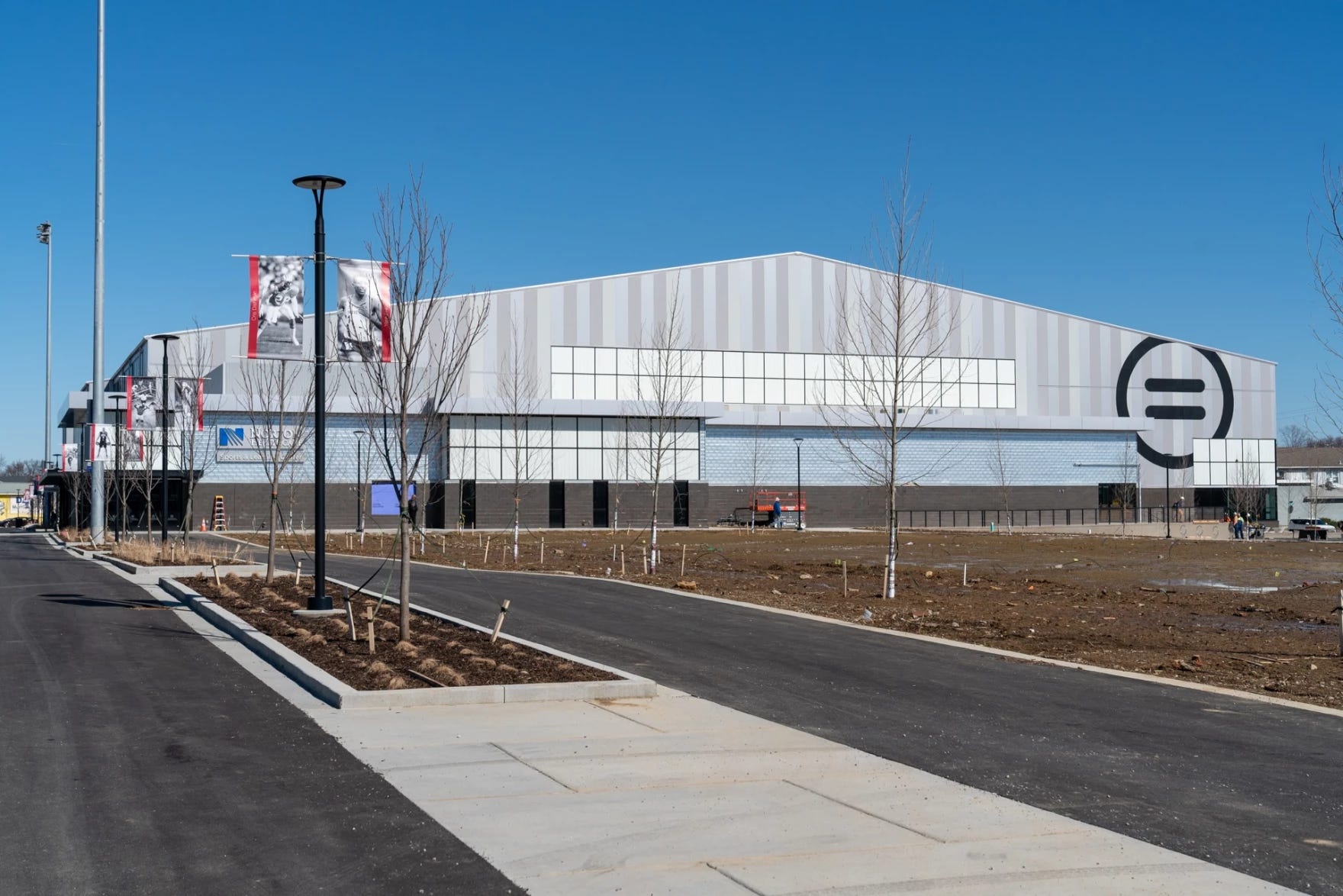
This past week, I attended a groundbreaking ceremony for the new multipurpose athletic fields at the Norton Healthcare Sports & Learning Center (SLC) in the West End of Louisville.
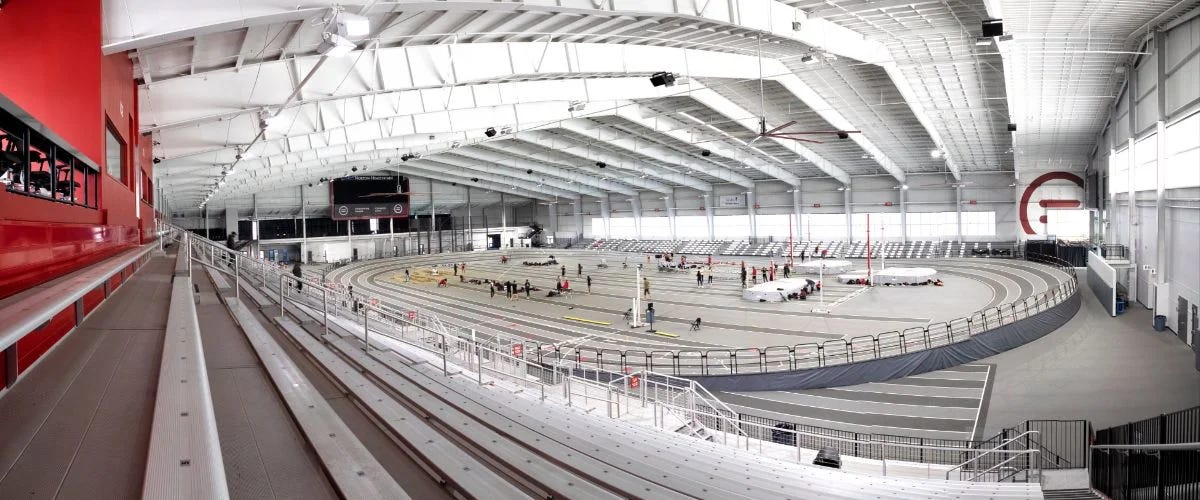
Beginning in 2018, I was fortunate to serve for three years as a member of the development committee, spearheaded by current SLC President Sadiqa Reynolds, that helped raise $53 million to build the 90,000 square foot anchor facility with 4,100 seats and a 200-meter banked indoor track.
The fields are the latest addition to the impressive 24-acre campus, which less than a decade ago was a contaminated brownfield site in one of the most economically disadvantaged and underinvested areas of our community.
Since opening in 2021, the track has hosted hundreds of events for more than 500,000 visitors, including local, regional and national indoor and outdoor track meets, concerts, and community functions. The facility has generated approximately $50 million in economic impact for the area. It is—by any measure—a notable success and, if you’ve attended a meet there, you’ve likely watched more than one future Olympian compete.
Returning to the Sports & Learning Center last week reminded me how it remains a beacon of hope and a symbol of collective progress during the often dark, selfish, and regressive chapter we’re living through in this country.
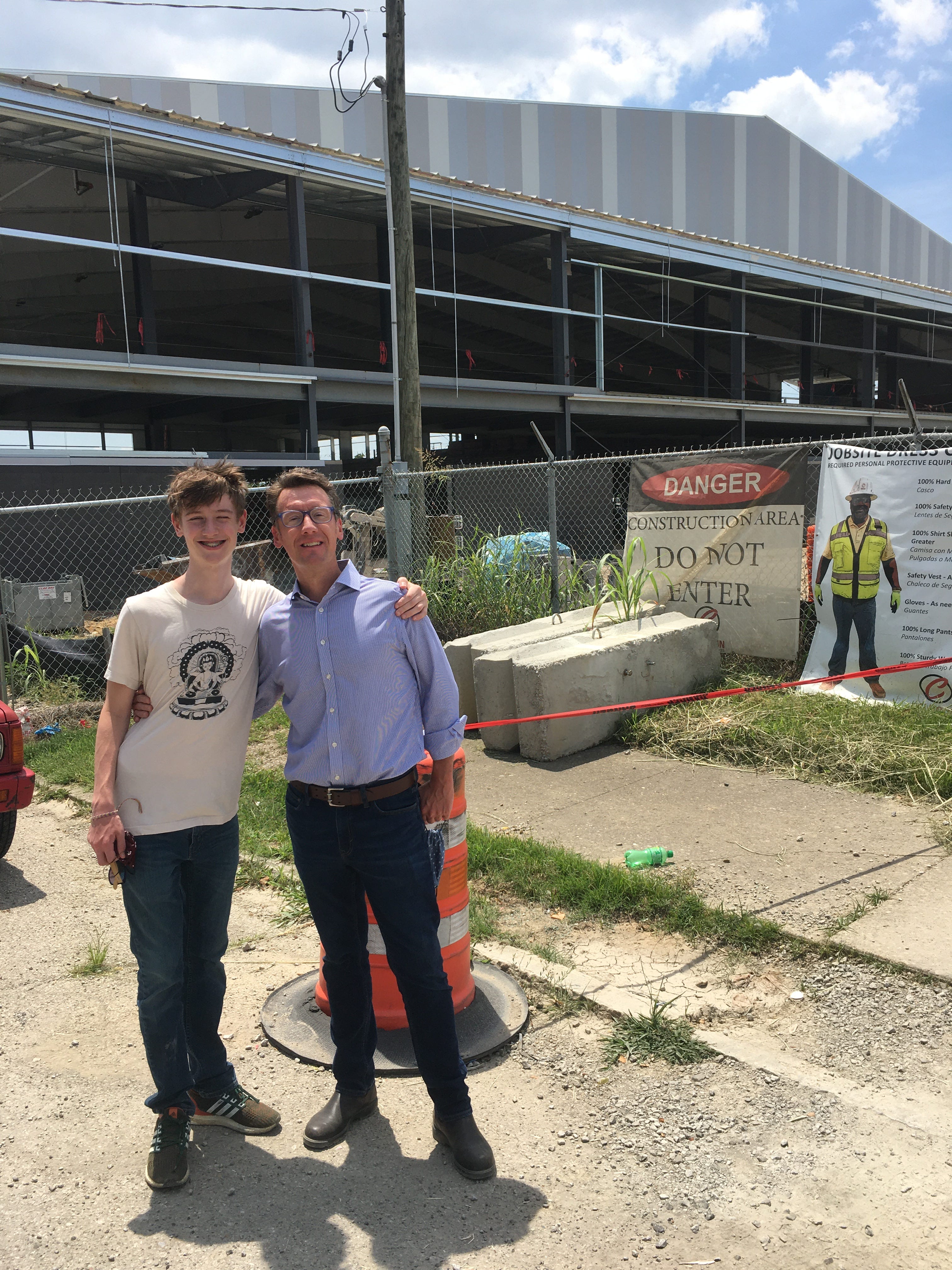
I wrote the following essay almost eight years ago—three years before the track opened—after I took my two sons to the still-empty site to tell them what we hoped to build there and why. I believe it’s a story that’s still worth sharing.
This piece was published on October 12, 2018, in the Louisville Courier-Journal.
On Father’s Day this year, I asked my 12- and 17-year-old sons to accompany me on a drive from our Crescent Hill home to the corner of 30th and Muhammad Ali Avenue in West Louisville’s Russell neighborhood. A GPS will tell you the distance is a little more than 4 miles. To my white, upper-middle-class sons, who have spent their entire lives in a nice house, in a largely safe neighborhood, surrounded primarily by kids who grew up in similar comfortable circumstances, we may as well have driven to a different city.
Statistics will tell you that many of the neighborhoods in West Louisville are disproportionately black and poor. The median annual household income in Jefferson County as a whole is $48,695. In West Louisville it’s approximately $22,000, and in parts of the Russell neighborhood it’s as low as $9,000. But statistics rarely tell the full story, so I wanted my sons to see something important with their own eyes. As the great African-American author and anthropologist Zora Neale Hurston wrote in her seminal work “Their Eyes Were Watching God,” “Yuh got tuh go there tuh know there.”
Like most white kids from the East End my sons have seldom been west of downtown. I took them to Russell on this muggy day in mid-June to see the embryonic site of the Louisville Urban League’s Sports and Learning Complex [the name was subsequently changed to the Norton Healthcare Sports & Learning Center to reflect a significant investment from the organization].
I had recently agreed to serve on the Urban League’s development committee to help raise the $35 million in funds that will be required to complete the project. I wanted to tell my sons about what we’re planning to build while showing them the “before” picture.
Standing on the corner of 30th and Muhammad Ali, looking north toward Market Street, what we saw was an expanse of sun-bleached concrete with weeds poking through the cracked surface like scraggly green-brown hair on a vast unshaven face. Chain-link fencing, looped with razor wire on top, stretched as far as the eye could see. What they couldn’t see, but I also knew to be true was that lurking beneath the surface of this “brownfield” site, was decades of environmental contamination.
For many African-American children in Louisville I imagine this barren, neglected site has served as a painful symbol of hopelessness. And when these same little black boys and girls travel outside their neighborhood to the well-funded, well-kept neighborhoods of Louisville, they are reminded that our community has not valued their lives or invested in their potential in the same way as many of our other children.
In the Louisville Urban League report State of Black Louisville, released earlier this year, several data points underscore the educational challenges facing young black people in Louisville:
Beginning in kindergarten, Jefferson County’s African-American students are deemed less ready scholastically than their white schoolmates (43 percent to 55 percent).
By elementary school only 29 percent of black students score at “proficient or above” compared to 58 percent of white students.
In 2017, only 18 percent of African-American students took advanced placement exams in high school.
By college the gap has increased even further. Of nearly 9,000 degrees conferred by area colleges and universities in 2016, only 12 percent were earned by African-Americans.
The report examines reframing the educational discourse from talking about an achievement gap to focusing on an opportunity gap (where the opportunity gap is the cause and the achievement gap is the effect).
“The opportunity gap shows up when families can’t afford excellent preschool, when kids can’t learn because they go to school hungry, when ‘certain’ schools are under resourced, when college is too costly.”
Even in the cases where promising African-American students from West Louisville excel in their studies, they are faced with the choice of returning to a community lacking in high-wage jobs, where real estate values have been decimated by discriminatory redlining practices and where shopping, dining and service options are severely limited.
Which brings us back to the Louisville Urban League’s Sports and Learning Complex and the once-in-a-generation opportunity we have to build a world-class track and field complex on that sun-bleached concrete slab smack in the middle of West Louisville. The proposed 24-acre Complex will feature:
An indoor 200-meter, six-lane hydraulic track with eight lanes for sprints and hurdles
Space for other events like pole vault, shot put, long jump and volleyball
Seating for more than 4,000 spectators
Sports training, treatment, educational and health facilities
An outdoor 400-meter, eight-lane track with multi-sport infield and seating for 500
6-7 acres for retail, mixed-use and hotel development
This is a facility capable of hosting USA Track & Field events and NCAA Championships, in addition to local and statewide meets. The nearest comparable track and field facilities in the region are booked out until 2023.
Demand far outstrips supply, and as a small business owner I know that puts our complex in an enviable position. Based on conservative projections, the Sports and Learning Complex is financially feasible and the business model is sustainable. Some of the best athletes in the world will come to Louisville to compete. These athletes, their families and friends, their coaches, the media and others will stay at hotels, eat at restaurants and shop at the site.
“We do not have the resources to significantly invest in our own communities. We can’t self-fund large-scale capital projects,” writes Louisville Urban League President and CEO Sadiqa Reynolds in the introduction to the State of Black Louisville. “We need intentional investment in the dreams of Black Americans and capital investment with Black ownership on the other side of that deal.”
With this Sports and Learning Complex we have the ability to help black Americans in Louisville realize a dream that’s been deferred for far too long. With one project we can help clean up 24 acres of environmental contamination, build a world-class track and field destination and stimulate significant economic development that will, in turn, create and support local businesses, spur housing appreciation and help many African-Americans in west Louisville begin to build long-term wealth.
I took my sons to 30th and Muhammad Ali this summer because I wanted them to envision what’s possible if enough people make an intentional investment in a transformative neighborhood project. That even if they don’t have roles to play today, when we build this track they will know they can make a difference. That today’s polluted soil, weeds, wire and cracked concrete are tomorrow’s gardens, tracks, businesses, hotels and homes. That the young black boy or girl standing on that barren 24 acres today may be the next Usain Bolt or Jackie Joyner-Kersee, or a doctor, real estate developer or college professor, because we believed in his or her potential enough to invest.
The vision is there. My boys see it. Do you?
Beautiful!
Thanks so much John. You know as well as anyone!